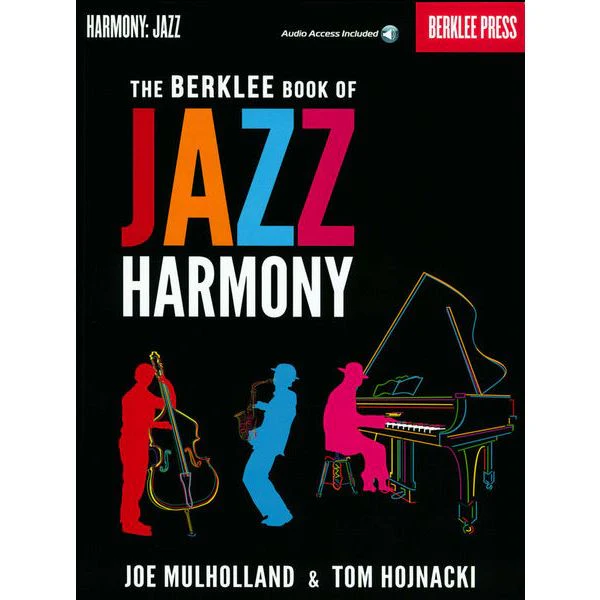
Learn the principles of jazz harmony, as taught at Berklee College of Music.
This text provides a strong foundation in harmonic principles, supporting further study in jazz composition, arranging, and improvisation. It covers basic chord types and their tensions, with practical demonstrations of how they are used in characteristic jazz contexts and an accompanying recording that lets you hear how they can be applied.
You will learn to:
- Use the essential harmonies that create a characteristic jazz sound
- Expand basic seventh and sixth chords with available tensions
- Understand the theoretical relationship between chords and scales, and how to use that theory in the creative process
- Understand the syntax of jazz chord progressions
- Create within diatonic, blues, and modal contexts
- Construct appropriate chord voicings to strengthen your progressions
“When future beings unearth the artifacts of our culture, the Berklee Book of Jazz Harmony will stand out as the most complete summary of modern diatonic harmony used in jazz and popular music of this era. This book is detailed, sophisticated, and surprisingly hip. I especially enjoyed the chapter on the blues as well as how the authors noted the effect of beat placement on harmonic choices. This sentence struck me: ‘We can hear and feel a chord operating one way when it arrives, but our interpretation of it that chord can also adjust retroactively.’ The book is replete with similar descriptions giving this complicated subject life of its own, beyond the usual mathematics and terminology.”